 Episode 87
· 56:17
Cassie Newell (00:35)
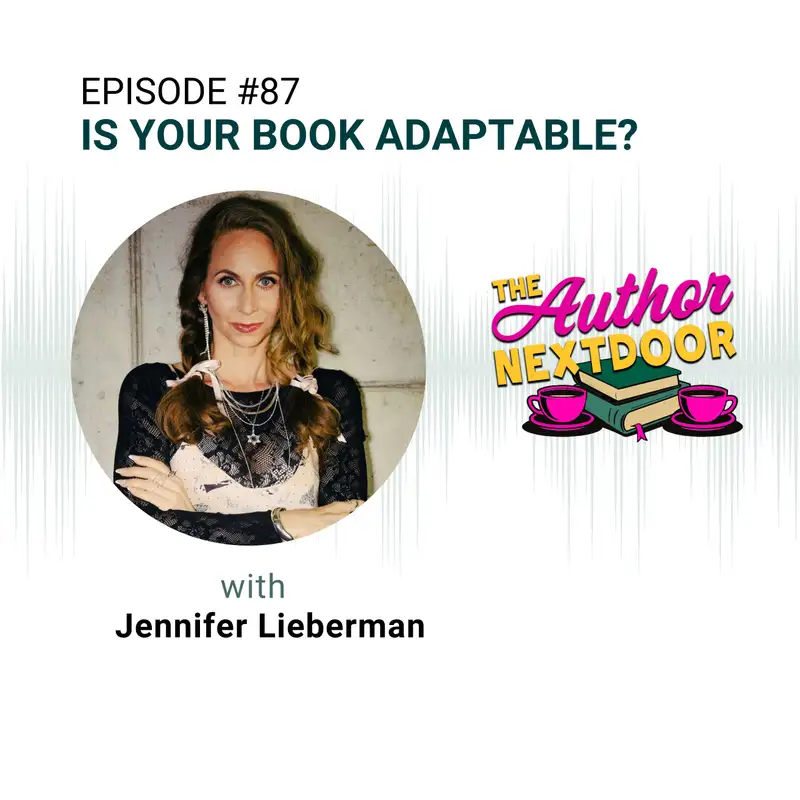
Welcome to episode 87. I'm Cassie Newell, and I'm here with my co-host, Angela Haas. And this month we're diving into some hot topics. Today we're chatting with actor, writer, producer, Jennifer Lieberman. For years, many indie authors assumed film and television adaptations were something that can only happen to traditionally published books.
But over the last few years, we've watched that change. Independent authors are finding new opportunities as streaming services, production companies, and studios look beyond traditional publishing for stories with passionate audiences. So today we're asking, what actually makes a book adaptable? And what should authors be thinking about long before Hollywood ever comes knocking?
So, to give a little background, Jennifer Lieberman is an award-winning actor, writer, producer, and bestselling author herself. And she founded Make Your Own Break to help other artists take control of their creativity destiny. So, Jen, when people hear book adaptation, they usually think, is my story good enough to become a movie? But I can imagine the real question is more specific than that. So, from your perspective and your background as a writer, an
Actor and producer, what actually makes a book adaptable for film, television or stage?
Jen (01:54)
Well, first of all, I think one of the most important things is is your story original? And it's,
Cassie Newell (01:59)
yeah.
Jen (02:00)
you know, because I think in literature there's only like seven stories, and every story is an
Cassie Newell (02:06)
Yeah.
Jen (02:07)
adaptation of one of those seven stories or themes,
Angela Haas (02:08)
Right.
Jen (02:11)
right? So one of the big questions is, is this original?
Cassie Newell (02:15)
Mm-hmm.
Jen (02:17)
But
by that same token, are people gonna be able to relate to it and see themselves in these characters?
Cassie Newell (02:25)
Mm.
Jen (02:26)
You know, because one of the one of the big things is the characters have to be relatable. We have to fall in love with them. You know, even
Cassie Newell (02:34)
Yeah.
Jen (02:34)
if they're villains, like I was a huge fan of Breaking Bad, it was one of my favorite
Cassie Newell (02:38)
Yeah.
Jen (02:39)
shows.
And ultimately, like he's not a good guy, but you
Cassie Newell (02:45)
No, no, no.
Angela Haas (02:46)
No.
Jen (02:48)
love him and you're rooting for him, and he's the lead of the show, and you want
Cassie Newell (02:52)
Yeah.
Jen (02:52)
him to come out on top, and you want him to win. So I I think the element of having an original story is major, but it ha but it can't be so
original that you're like alienating an audience.
Cassie Newell (03:07)
Mm.
Angela Haas (03:08)
Mm-hmm.
Jen (03:08)
Because
I've I've read some pieces from friends, colleagues, you know, that were more in the like sci-fi or fantasy space. And, you know, there weren't really humans in the story, which is fine. There don't have to be, there doesn't have to be humans. But I feel like they were trying so hard to be something so original and so different that I was just like, I can't follow this.
Angela Haas (03:36)
Right.
Cassie Newell (03:36)
Yeah.
Jen (03:37)
you know, like this is really it's really heady, it's really hard. There's so many, there's so many things going on that I can't follow that. And as much as you know you want to have dynamic storylines and of course there's gonna be an A story and a B story and multiple characters, you want your audience to be able to follow them.
That being said, I think that's one of the things that separates a book adaptation t to a film versus a series. Right. Because
Angela Haas (04:10)
Right.
Cassie Newell (04:11)
Fair.
Jen (04:12)
because a film is one and done, unless there's several volumes or several kinds
Cassie Newell (04:17)
Right.
Jen (04:18)
of, you know, books in that series.
But like for example, Twilight worked really well as standalone films for the different books, whereas Game of Thrones had so much going on that it needed to be a series. Like, can you imagine Game of Thrones in like a two hour? No, like
Cassie Newell (04:38)
Yeah. No. No. And it's
Angela Haas (04:39)
No. Mm. Mm-mm.
Cassie Newell (04:42)
so dense. Like you needed the hooks to even get like they're so long. It it was so I I was a big T O T person.
Jen (04:50)
Yeah, like so many storylines,
so many characters, so many things go, you know, so so that's the other thing too. And by that same token, I wouldn't write something, you know, if you're writing a book and that is the genre your your or the medium that you're passionate about writing, don't think about how is this gonna be a movie or how is
Cassie Newell (05:15)
Yeah.
Jen (05:15)
this gonna be a series, you know.
because then you're like putting your ideas into a box that they mut they must fit in this box. And then
Cassie Newell (05:27)
Yeah.
Jen (05:27)
you take a a lot of that creative freedom away.
Cassie Newell (05:31)
Yeah, I find it interesting when I think about Wicked. I don't know if you've actually read the book, but it is
Jen (05:37)
I'm not.
Cassie Newell (05:38)
it's so different from the musical, but the bones and structure is there, but it is different. and I wonder I sometimes I wonder, I was like, do you think when he wrote that, like he was thinking, yes, stage musical? Doubtful. So doubtful. I don't know how that you know.
matriculated to what it has, but it's kind of amazing.
Jen (06:01)
Well, and and that's the thing. And you know, the guy who wrote it wasn't alive to be around to see the musical. I'm sorry, I forget his name, it escapes me.
Cassie Newell (06:13)
McGuire, right?
Jen (06:15)
That's right. But
Cassie Newell (06:16)
Yeah.
Jen (06:16)
you know, so that's not even something that was on his mind. And I think right
Cassie Newell (06:20)
Sure.
Jen (06:21)
now there's so many things that are being adapted into musicals for Broadway that were never intended to be musicals. Like, for example, A Bronx Tale. Like A Bronx Tale
Cassie Newell (06:31)
Yeah. Yeah.
Angela Haas (06:32)
wow.
Jen (06:34)
was originally a one man show
Angela Haas (06:38)
Mm-hmm.
Jen (06:38)
created and performed by Chaz Palmenteri.
And
then Robert De Niro, several, you know, a few years later,
Cassie Newell (06:45)
Yeah.
Jen (06:46)
was like, this would be a great movie. I'm gonna direct this movie.
Cassie Newell (06:50)
Mm.
Jen (06:50)
And then 20 years after that, or 18 years after that, some Broadway producers like, that's gonna be our next musical. You know what I mean?
Cassie Newell (06:59)
Yeah. In that wild.
Jen (07:01)
So the thing is, like, let your imagination run wild, tell the stories you want to tell, create the characters you want to create.
And you have no idea the trajectory of where it's gonna go. And that's something that I talk about often when I'm talking about theater, because I teach a workshop about how to produce theater, and that's actually my new book, Independent Theater Production for the 21st Century and Seven Simple Steps. because step one is your goal. What's your goal? What are you trying to
Cassie Newell (07:32)
Yeah.
Jen (07:32)
achieve? And
You know, for example, like I don't think when Chaz Palmettery did a Brog's Tale, maybe he had an idea, like wouldn't it be great if Robert De Niro made this into a movie? But I don't think
Angela Haas (07:45)
you
Cassie Newell (07:46)
Yeah.
Jen (07:47)
that was a realistic idea to him when he was writing and developing the show.
another example is Hedwig and The Angry Inch. I don't know if you guys are familiar with that musical.
Angela Haas (08:00)
Yes.
Jen (08:01)
It was on Broadway. Neil Patrick Harris starred in it. Well, the show the show originated
Cassie Newell (08:04)
Yeah.
Angela Haas (08:05)
Yes, I've seen it. It's wild.
Jen (08:09)
like off Broadway. And then in like late
90s, possibly early 2000s, it was adapted into a super gritty indie film.
And then from there it went back to theater and starred an A-list, Neil Patrick Harris, in this huge Broadway musical. You know what I mean? So
Cassie Newell (08:32)
Amazing. Yeah.
Jen (08:36)
a story is a story, and a great story is gonna have a life cycle that the creator never anticipated. And and I think
Cassie Newell (08:48)
Wonder if you have a
creator though who would love that. Like, so for example, I've been inspired a lot by soap operas and series for my short romances. I mean, it totally lives rent-free in my head with every little book and every little person. And I would love that, but I wouldn't know how to right now. My focus is my stories, like and just
Jen (09:14)
Mm-hmm.
Cassie Newell (09:15)
keep going and pushing that out. But I wouldn't even know where to begin as an indie author to do anything with anything, you know, to t to try to make that goal a reality. What would you say to someone like that?
Jen (09:27)
That's such a great question.
That's such such a great point and such a great question. So there are several different avenues. Number one is are you a screenwriter? Because yes, so
Cassie Newell (09:39)
No.
Jen (09:41)
that's so that's so that's something that needs to be addressed. Because
Cassie Newell (09:46)
Yeah.
Jen (09:46)
screenwriting is its own art form. And not only is screenwriting
Angela Haas (09:50)
Mm-hmm.
Jen (09:51)
its own art form, there's a very different format.
For a feature film versus a half hour sitcom versus a one-hour procedural, like a law and order. All of those versus a play.
Cassie Newell (10:05)
Right.
Angela Haas (10:05)
versus a play. Yeah, like yeah.
Cassie Newell (10:08)
Yeah.
Jen (10:09)
Yeah, and a play is a totally different thing. exactly. So these are all separate mediums, you know, but at the same time, you can be proficient in more than one.
First of all, and second of all, sometimes these stories bounce back and forth. And how many, how many films are now series or inspired by? Like I saw Amazon
Cassie Newell (10:31)
Right.
Jen (10:31)
now has a series called Elle based on L Woods
Angela Haas (10:34)
Mm-hmm. Yes.
Jen (10:36)
from Legally Blonde,
Cassie Newell (10:37)
Yeah.
Jen (10:37)
right? So they're like expanding that franchise. I believe Legally Blonde had three.
movies in the series. It was a trilogy. And now they decided like, okay, we're gonna reimagine what this girl's childhood would have been like
Angela Haas (10:56)
Yeah.
Jen (10:57)
making her a f you know, because Legally Blonde was a fish out of water story, the original. I don't really remember the second and third. I don't even know if I saw the third, sorry. but the first one I like
Angela Haas (11:07)
I didn't know the second she goes to
Cassie Newell (11:07)
Mm-hmm.
Angela Haas (11:10)
the White House or something. She's not like she's running for office
like something like that. Yeah.
Jen (11:13)
I I did see the second one, but yeah.
I don't remember it, but you know, the first one I kind of remember verbatim, like 'cause I've seen it so many times and I love it and it lives red-free in my head. So I believe this new one, like a young teenage version of Elle, is being, you know, t taken out of Beverly Hills and has to live her high school somewhere else, fish out of water.
Okay, so it's a similar fish out of water story, same kind of character. Okay, that's fine. So sorry, I'm going on a tangent from your question, but your question is
Cassie Newell (11:46)
That's okay.
Jen (11:46)
how do you even figure out how to try and get your pieces adapted? So one of them would be take a couple screenwriting classes. That is a good place to start, you know, and there's you there's
University courses that you can do online, you can do UCLA Extension online. And I recommend UCLA Extension. I graduated from one of
Cassie Newell (12:14)
Yeah.
Jen (12:14)
the programs there. But
Angela Haas (12:15)
He
Jen (12:16)
also, what I loved about it is every single teacher is working in the industry. Every single
Cassie Newell (12:24)
nice.
Jen (12:24)
teacher
Angela Haas (12:24)
Nice.
Jen (12:26)
has a career.
has clients, has produced movies with A-list stars. You know what I mean? So they
Cassie Newell (12:32)
Right.
Jen (12:33)
actually, and they didn't do it 20 years ago. They're still doing it right now. So not
Cassie Newell (12:37)
I love that.
Jen (12:38)
only are these great people to teach you, they're great connections to have in your network because everything is about network, right? And social media has really taught us that.
Everything is about who is in your network, who do you know? Doesn't matter how fabulous you are, doesn't matter how good your stories are, how good your writing is, if you don't know the people who are looking for these projects or trying to make these projects. So step one
Cassie Newell (13:07)
Right.
Jen (13:09)
would be learn how to become a screenwriter, learn how to adapt some of your pieces into
the screen in into the format and you want to decide. The other thing I was going to say is vertical series are the hottest thing right now. And they are huge,
Cassie Newell (13:25)
Yes, especially for indie authors lately.
Jen (13:29)
especially for indie authors, they are huge, huge, huge moneymakers. And they they don't take a lot of money to make. They're kind of low budget productions, but that doesn't
preclude them from becoming very successful and having millions of viewers. So that's another thing too. If you have these kind of short, you know, novellas, if they're soap opera inspired, that's the whole genre. So I would
Cassie Newell (13:55)
Yeah.
Jen (13:56)
say look into vertical series. Study some of the series that are doing really well. Figure
out who the distribute distributors are, what outlets are putting these on.
Who's producing them? You know, you always kind of want to find out who's at the top of the food chain and then move down
Cassie Newell (14:14)
Yeah.
Jen (14:15)
from there. Right.
Angela Haas (14:16)
Mm-hmm.
Jen (14:17)
you know, it's gonna be very hard, just like in the literary world, writing, it's very hard to get an agent. It's very hard to get a manager. And the best thing you can do is build your own following online. The more followers you have online, those are assets now. You know, the
The amount of people you reach is a huge asset, just like the amount of books you can sell on your own is a huge asset. If you can prove you're selling thousands of books, tens of thousands of books, there's gonna be some interest because you're generating, you know, like this
Cassie Newell (14:52)
Mm-hmm.
Jen (14:52)
machine, this production machine. So vertical series are huge. There's actually a book, hmm.
I don't remember the name of
Cassie Newell (15:02)
Peace.
Jen (15:03)
it, but it's a colleague of mine. she has made a few vertical series that became these huge kind of breakout successes, and she wrote a book about how to write
Cassie Newell (15:14)
nice.
Jen (15:14)
a vertical series. Her name is Isabel Dren, D-R-E-N, and it's on Amazon. I read it. It's a really great.
Angela Haas (15:22)
I'm looking it up.
Jen (15:23)
It's a really
Cassie Newell (15:23)
Yeah.
Jen (15:24)
great step-by-step how-to. And she talks about the tropes that work, but also once again, this is an evolving industry. This is an evolving
Cassie Newell (15:33)
Yeah.
Jen (15:33)
new medium. And you know what worked last year isn't necessarily going to be what's hot this year. But
Cassie Newell (15:40)
Sure.
Jen (15:40)
I think that's also a really great jumping off point. And knowing is your piece the, you know, the one that you're trying to push.
Is it better a series? Is it better a vertical series? Is it better a film? And then
Another thing to do is figure out how to put a pitch deck together. Right?
Angela Haas (16:00)
Mm-hmm. Yeah. Yep.
Cassie Newell (16:00)
right.
Jen (16:03)
because if you're gonna be kind of making inquiries and cold calling, you're looking to sell. You're not looking to produce, right? You're looking for somebody to come and scoop it up and produce it for you. So
Cassie Newell (16:17)
Right.
Jen (16:18)
Another thing is to network within circles of producers who are looking for content, production companies who are looking for content.
Cassie Newell (16:28)
Is it worthwhile to query agents who are more on this side of the industry to do this pitching and this aspect for you versus, you know, because I find myself as an indie author balancing a lot of things that aren't necessarily my area of expertise. And when it gets too much, I tend to outsource. So I'm
just curious, is there people around that could
Jen (16:52)
It is, but you have to help.
Cassie Newell (16:54)
do that for you?
If they believed in your
Jen (16:56)
Well
Cassie Newell (16:57)
project?
Jen (16:58)
yes. However, getting to them and having an attractive package, you still need solid scripts and you need more than one. You need the the average, the sweet spot is about three solid scripts because they don't want a one-trick pony and they don't they're not interested in dealing with people who only have one project.
You know, and a lot of
Cassie Newell (17:24)
Interesting.
Angela Haas (17:24)
Right.
Jen (17:24)
times when you're pitching, you want to have more than one pot project to pitch because they can say, no, we have something too similar, or no, we don't do vampire, or we want werewolf, or you know what I mean?
Cassie Newell (17:39)
Right. What's hot?
Angela Haas (17:42)
Is
this is it truly who you know, though,
how do you network beyond, you
Jen (17:50)
Okay.
Angela Haas (17:50)
know,
Cassie Newell (17:50)
Right.
Angela Haas (17:50)
where we are,
Jen (17:51)
go
to film festivals, go to different festivals. You know, every film festival has people who are making films or making series. And that's the thing. It's not like people who are making films only do films, just like writers.
Angela Haas (18:03)
Right.
Jen (18:04)
You know what I mean? Like writers can bounce between mediums, filmmakers, actors. That's another thing, too. There's always actors at festivals. And
It might not be a producer or an agent or a literary company who's championing you. You might find an actor who is looking for a vehicle, is looking
Angela Haas (18:23)
Mm-hmm who has contacts. Yeah. Yeah
Cassie Newell (18:24)
Wow.
Jen (18:27)
for a vehicle who wants a piece that they can star in. And they might not have A-list connections, but they might have C list connections. And you know, there's so many different avenues and different opportunities out there.
But I think everybody's going for the gold ring. You know, everybody's going like, Paramount or MGM or, you know, an Amazon or a Netflix. Whereas there's there's Tubi, there's Roku, there's
Angela Haas (18:54)
Mm-hmm.
Jen (18:56)
you know,
Cassie Newell (18:56)
Yeah.
Jen (18:56)
all these other there's YouTube. You can put anything you want on YouTube. And if it gets traction, you're gonna monetize it. So
Cassie Newell (19:04)
Yeah.
Angela Haas (19:05)
Right? Yeah.
Yeah.
Cassie Newell (19:07)
Interesting.
Jen (19:07)
So there
so I think one of the keys is thinking outside of the box and not going where everybody else is trying to go.
Cassie Newell (19:16)
Yeah.
Angela Haas (19:16)
Right, well, and that leads me to theater. That's something as indie authors, like that didn't even cross my path thinking wise. And I was a theater kid. That was my major when I went to college and I was in musicals and I just loved it. I've never thought
about adapting something I have for theater because I think
I've always thought of writers for theaters, like Neil Simon is one of my favorites, know, Barefoot in
Cassie Newell (19:50)
Yeah.
Jen (19:50)
As well.
Angela Haas (19:50)
the Park, The Dinner Party. But to me, I can picture like you don't have elaborate set changes. You know, you kind of almost operating out of one central apartment or, you know, just the backdrop that maybe and you're thinking like, gosh, I have a small town Western romance. How would they ever is that even something?
people would be looking for.
But then once you said, Hedrick and the Angry Inch, which I remember seeing the film because it was fresh off Sundance. And I actually hadn't seen anything like that before, only because those I think sort of artsy films, I think that was like the crying game I saw in the theater. And I was just like, whoa.
That just, I think those theaters were, those films were just starting to be more represented and coming out. And so it just expands your mind. But I think all these little pieces, like you just,
how would my book fit into theater? Which I think is something that, I don't know, that
Jen (20:51)
So theater
Cassie Newell (20:51)
Yeah.
Angela Haas (20:52)
would be so cool to see, you know, it live, just being at, yeah.
Cassie Newell (20:55)
Love a musical, but part of me is like, who comes up with the
music and the lyrics? It's not me, but.
Jen (21:00)
Yeah,
that that becomes more involved. But g but getting to your question,
Cassie Newell (21:04)
Amazing.
Jen (21:05)
Angela, about theater is first of all, now with projection, you can project an
Cassie Newell (21:11)
wow, yeah.
Jen (21:11)
image into the back of the theater and you can make it anywhere you want. And
Angela Haas (21:14)
that's true.
Jen (21:16)
it's very inexpensive.
Cassie Newell (21:17)
Yeah.
Jen (21:19)
You know, and okay, maybe you have a table and chairs that move around, or you have a couch that moves around, or a dining room t you know, and and you have s like little set pieces here and there.
But the other thing too is when people think theater, they think big scale. I'm
Angela Haas (21:35)
Right.
Jen (21:35)
an indie theater producer. I started producing in the East Village in New York in 50 seat black box theaters. You know, and the types of stories that you can tell there, yes, it's great if it's all contained in one room.
But also if it's an independent film, it's better if it's contained too. Like my first two short films that I made, well, no, the first three, it was all one location. Like granted, one was the desert and Palm Springs, but it was just one location, you know, and it was a 10-minute piece. We were able to shoot it in one day. Same with my my other two shorts, Leash.
One room, two actors, one day. And it's easier to get people to work for half the rate or get people to donate time, equipment, resources when it's one day, as opposed to
Angela Haas (22:32)
Mm-hmm. Yeah.
Jen (22:34)
you know, and if you and the other thing too is perhaps starting off with a short piece,
Cassie Newell (22:41)
Yeah.
Jen (22:41)
a five-minute, ten-minute piece to showcase your writing, to showcase that it can translate.
onto the screen. I've started I've done several short films. I produced one feature, it wasn't mine, but I'm gearing up to produce my own feature film now. But I have a track record of several short films. I'm now a
Best selling and award-winning author. I'm an award-winning playwright. You know what I mean? So when I go to investors and I'm like, hey, I'm looking to raise X amount of hundreds of thousands of dollars for my project, I have all of this body of work to show that I know what I'm doing. I know how to handle
Angela Haas (23:22)
Mm-hmm.
Jen (23:23)
the budget. I know where the money's gonna go. I know I'm a solid writer.
you I know how to wrangle a team. I know how to put a cast together because they can see all of my past productions. They're there's proof in the pudding kind of thing. And you know, there's something to be said for starting off small and growing your
Angela Haas (23:43)
Right.
Jen (23:44)
projects. So starting off with a vertical series or starting off with
Cassie Newell (23:49)
Yeah.
Jen (23:49)
you know a sh a short piece just to test out your writing and see how it goes.
And then take it to some festivals because festivals are the absolute best place to network because there's producers
Cassie Newell (24:02)
Yeah.
Jen (24:03)
and directors and actors and all the people who want to work with you on your film at a festival.
Cassie Newell (24:10)
Yeah.
Angela Haas (24:10)
Yeah, we have actually, and we've been sponsoring through our business, the Rocky Mountain Women's Film Festival is here in Colorado Springs every year. And it's
Jen (24:20)
The only thing.
Angela Haas (24:22)
only grown. that, you know, I just never thought of it, but I probably need to go and see some of the amazing films and just, you know, you just sort of network there. Yeah.
Cassie Newell (24:35)
Yeah.
Jen (24:36)
There's yeah.
So for sure, festivals and there's also networking groups on LinkedIn. There's networking groups on Facebook. There's networking groups, you know, it can be a woman's group, it can be a film group, it can be a romance writer's group. this woman Isabel, who wrote the book about vertical series, about how to write a vertical series, she's got all these WhatsApp groups. You know,
Cassie Newell (24:59)
wow.
Jen (24:59)
one is for one is called the Film and TV Hub.
And then another one is specifically for Canadians because she's Canadian, but she also lives in LA, you know. So she ha sh sh she was at Cannes Film Festival the past few years. So she has a hub for the Cannes Film Festival. So if you're in one of her other hubs and you're gonna be in Cannes, you know, or if you're gonna
Cassie Newell (25:22)
Well.
Jen (25:23)
be at Sundance or you're gonna be at the American Film Market.
You know, it's like you can network within the group throughout the year and and say, hey, I'm looking for this, or I need this, or do you know of a good lawyer? Do you know of a good editor? it's a great resource, but then when there's an event, she usually throws a party like for the hub. And that's another way to meet people. Because it all comes back, okay, great.
Angela Haas (25:48)
Yeah, I found her.
Yeah, I did. How to Write a Vertical Series in 10 Days. And her website looks amazing. got, she has made a significant impact in the Christmas movie genre. my gosh, already. I'm like so excited. But tell
Cassie Newell (26:04)
I'm in love.
Angela Haas (26:05)
me a little bit about vertical series
for listeners who may be like, what specifically is a vertical series?
Jen (26:13)
Okay, so a vertical series is something that's meant to be watched on your phone. So it's horizontal, like a TikTok video. So it's literally shot
Angela Haas (26:20)
Okay, so literally, okay, yeah, okay, gotcha.
Jen (26:24)
in the format to like to be watched vertically on your phone, and that's why they call it a vertical series. so it's meant for this medium.
Angela Haas (26:35)
Wow.
Jen (26:36)
so that's number one. Number two, the episodes are.
Are maximum three minutes long. They're two to three minutes,
Cassie Newell (26:43)
They're short.
Jen (26:44)
very short. And from Isabelle's book, what I learned is that you're basically taking a feature film length story, and you are feeding it to the audience in two-minute increments. So, but each increment is once again, very specific format and very specific writing style.
Has to end with a cliffhanger because they have to swipe to the next video. And you give away the first 10 for free. And then so that's the 20-minute mark, if they're about two minutes each, and then beyond the two-minute mark of the 20-minute mark, they have to sign up. And that's when you start monetizing your series. And
Cassie Newell (27:31)
Yeah, and a lot of
the different ones too, you can buy like your time and
Jen (27:36)
Hmm.
Cassie Newell (27:37)
like kind of like a a subscription model. Cause I've done
Jen (27:41)
Yeah.
Cassie Newell (27:41)
this with other books sellers too, and I've been looking at them because some of them are anime and some of them are actual physical people. not anime, animation.
in
Jen (27:51)
Mm-hmm.
Cassie Newell (27:51)
physical people. So it's it's really interesting. So instead of scrolling on your phone for it, you know, like in social media, you're doing it in entertainment ways. That's basically it. Yeah.
Jen (28:01)
Yeah, and they have their own platforms. They they have
Angela Haas (28:02)
That's just...
Jen (28:04)
their own platforms, their own streaming services, so to speak.
Cassie Newell (28:08)
Yeah.
Jen (28:08)
And yeah, and you can sign up for that streaming service and you have a certain amount of hours you can watch. So you don't even have to finish the whole series of one show. You know, you might watch part of one show and be like, Okay, I'm done with this and hop on to the next one.
You know, the hope is that the writing is compelling enough, that the cliffhangers are good enough that you keep going and you know, scrolling until you're you're finished. But yeah, it's just these bite-sized little episodes meant to be watched vertically. The two genres that are the most popular right now, because it's mostly a female-centric world, are the soap opera romances, and there is some horror getting in there.
but
Angela Haas (28:48)
Wow.
Jen (28:48)
be the soap opera romances follow the tropes, right? Like the millionaire trope, the mobster trope, the werewolf or vampire trope, you know, the powerful narcissistic
Angela Haas (28:54)
Mm hmm. Right.
Jen (28:59)
man. you know, like the fifty shades of gray kind of thing.
Angela Haas (29:03)
Mm-hmm.
Jen (29:04)
So I I've never watched one one, so I don't know as much about it. Everything
Cassie Newell (29:08)
Do you have it? You should.
Jen (29:10)
everything I know is from Isabel's book, actually.
Cassie Newell (29:13)
Mm-hmm.
Angela Haas (29:13)
Yeah.
Jen (29:14)
because you know, she posted it in the hub and was like, Hey, you know, support my new book and I did. And this was back in December. I think it came out in December. So that's
Cassie Newell (29:26)
Yeah.
Jen (29:27)
I I have limited information or knowledge, but I would I would suggest
Angela Haas (29:30)
Yeah, no, I this was helpful
because I was like I have no idea like what this even means and like that's just that's yet another thing writers I'm sure a lot of us haven't even thought of But that reminds me
Cassie Newell (29:44)
Exactly, yeah.
Jen (29:44)
Yeah.
Angela Haas (29:45)
of like it being like kindle vella like what vella was Yeah Yeah
Cassie Newell (29:48)
Yes, it is. Exactly, Angela.
Jen (29:51)
Yeah,
so you know, I would just suggest the
Cassie Newell (29:53)
yeah, I I think it's
Jen (29:55)
audience to grab that book if it's something they're interested in and take it from there because she has some courses, she has some writing intensives. I'm not this is I'm not she's not paying me at all.
Angela Haas (30:05)
Yeah, no, we want to talk
about you too. let's, we want to talk about your book, but I
Cassie Newell (30:07)
She should. She should pay you for that.
Angela Haas (30:10)
just, it's just
another opportunity that you can think about. Yeah. Yeah.
Cassie Newell (30:12)
another medium, right? Another opportunity. Exactly.
Jen (30:17)
Actually, Angela would like to circle back to theater because theater,
Cassie Newell (30:19)
Yeah.
Jen (30:21)
unlike film, goes through a different kind of process. And
Angela Haas (30:26)
Mm-hmm.
Jen (30:27)
it's you're gonna start off in smaller theaters and grow your audience into bigger theaters. Whereas filming, you have to have the script ready to roll, you shoot it once, and that's that. Whereas theater, the story has a chance to evolve.
And whether you're doing film or theater, you're gonna do some readings where literally you
Cassie Newell (30:50)
I hate.
Jen (30:51)
start off with a table read. My advice is you just invite some friends over who aren't even real
Angela Haas (30:56)
Mm-hmm.
Jen (30:56)
actors, and you order some pizza or something real easy, because I I like to feed people when I ask them for favors,
Cassie Newell (31:04)
Yeah.
Jen (31:06)
and you just read the script aloud, and that's gonna
generate some ideas.
Cassie Newell (31:12)
Yeah.
Jen (31:13)
It's gonna give you a chance to hear it because it's not meant to be read on the page like a book or you know,
Angela Haas (31:21)
Mm-hmm.
Jen (31:23)
it's meant to be heard aloud. And you I'm the reason I say you don't even need good actors is because good actors can make bad writing sound great. But if you just have regular
Angela Haas (31:32)
Right.
Jen (31:32)
people reading it,
you can really hear if there's holes in the story and then and then all your friends are gonna wanna chat about it over the pizza anyways and be like, Hey, this part was really cool or I don't understand this or, you know, like you this woman's a little bitchy. I don't wanna hang out with her for, you know
Cassie Newell (31:52)
Yeah.
Jen (31:53)
You know what I mean? Like whatever
Cassie Newell (31:55)
Right.
Angela Haas (31:55)
Great.
Jen (31:55)
it is, they're without you prompting it, they're gonna give you feedback. And that's always a great way to start because then you can see if you're excited about it and if other people are excited about it. And that will
Angela Haas (32:11)
Right.
Jen (32:12)
give you fuel for the fire to keep going and be like, okay, I think there's something here. You know, it the the
We still need to mold the clay a little better. It's you know, not the David yet, but there's something. So
Cassie Newell (32:24)
Right.
Angela Haas (32:25)
Right.
Cassie Newell (32:25)
That's such a great idea. You know, I mean, as authors, I know too, sometimes when you're editing, you read aloud because you can't cat your eyes skip over like the glaring edit you should have made, but when you verbalize it, you'll you'll stumble and you're like, I caught it, I got it, I found it, you know. Yeah, right.
Jen (32:48)
Yeah, your your brain knows what you meant to write and like the voices bleed into each
other. But
Cassie Newell (32:53)
So that's such
a great idea, but I could just see my my poor dad'll be like, okay, so I need you to play this older character and him just reading it very bare bones. But it would be hilarious. And of course
Angela Haas (33:00)
That would be hilarious.
Jen (33:03)
But
yeah, and for example, like even I've worked with people doing solo shows where they wrote the show for themselves and I don't let them read it for the reading because because
Cassie Newell (33:14)
that's smart. Yeah.
Jen (33:16)
they can't insert their shtick into the writing. Actually, have
Angela Haas (33:19)
Yeah, right.
Cassie Newell (33:19)
Yeah.
Jen (33:20)
to hear somebody else who doesn't have their experience and their point of view
Cassie Newell (33:24)
Right.
Jen (33:25)
read it just for the sake of.
Of being really nitpicky
Cassie Newell (33:30)
Right.
Jen (33:31)
about the writing.
Angela Haas (33:32)
Mm-hmm.
Jen (33:33)
because that's the other thing, too. We have to learn how to wear different hats. So,
Cassie Newell (33:37)
Right.
Jen (33:38)
you know, definitely changing the format to a play format or screenwriting format. There's so many resources available in order to learn how to do that properly. Because once again, going back to the agent or the literary manager.
If you don't have something in proper format, they're just going to dismiss it that you're not a professional, you don't know what you're doing.
Angela Haas (34:00)
Mm hmm. Yeah.
Cassie Newell (34:01)
Would you advise
indie authors such as ourselves to to pitch to agents in this way? I mean, just f for the opportunity for film or theater or just a different adaptation versus because typically when we talk about agents, we're talking about pitching our whole story for traditional publishing, not necessarily different types of rights for RIP.
So I I was just curious.
Jen (34:30)
Okay, so for example I don't have an agent. So, you know, I'm
Cassie Newell (34:34)
Yeah.
Jen (34:34)
an indie author, my stuff is self-published, not non-published,
Cassie Newell (34:38)
Us two.
Jen (34:42)
and I s you know I got sick of the chasing the agents. and that's why I ended up. And that's why I ended
Cassie Newell (34:46)
Yeah. you're speaking to the choir. Yeah. I got a little bruised earlier this year.
Angela Haas (34:46)
Mm-hmm.
Mm-hmm.
Jen (34:53)
up self-publishing. and that's the other thing too.
This is like something that is it's a double-edged sword. But agents are not decision makers.
Angela Haas (35:05)
That's true.
Jen (35:06)
They can only pitch you. Yes,
Angela Haas (35:09)
Mm-hmm.
Jen (35:10)
they might have connections, but it doesn't matter how many connections they have if your stuff is not what the producers want. And
Cassie Newell (35:18)
Right.
Jen (35:18)
that's why I suggest network with producers.
Network with directors, network with the people who are the decision makers, and then you can have dialogues with them about what they are looking for.
Cassie Newell (35:30)
Because you're the decision
maker of your IP. Yeah. I see. Yeah.
Jen (35:34)
Exactly. Because you know, just
Angela Haas (35:36)
Yeah.
Jen (35:38)
just like for an actor, you know, finding an acting agent, everybody thinks getting the agent is the be-all and the end all, but the agent is not. The agent submits you to casting directors. Casting directors' job is to provide choices to the director and producer.
You know what I
Cassie Newell (35:58)
Right.
Jen (35:59)
mean? So yes, it's great to network with agents and network with casting directors, but ultimately you want to have those relationships with the directors and producers. So when something when they're working on something, they just call you and they're like, Hey Jen, you wanna come do my project? And then
Cassie Newell (36:18)
Yeah.
Jen (36:18)
they don't have to th then you're not dealing with the casting director or the agent. You know, like the last
Cassie Newell (36:23)
Yeah.
Angela Haas (36:23)
Yeah, they're cutting that
person out. Yeah.
Jen (36:26)
Yeah, the last show I did in New York, it was before the pandemic, but I was doing an off-Broadway show. And I got that part because I was in a play a couple years earlier, and the director was friends with the person who wrote the play I was in. So he didn't
Angela Haas (36:43)
Mm-hmm.
Jen (36:44)
work on that play. He just saw me in the play, because I was his in his friend's
Cassie Newell (36:47)
Yeah.
Jen (36:48)
play. And we became friendly. And I started going to see all of the shows that he directed.
And
Cassie Newell (36:55)
Yeah.
Jen (36:55)
you know, was interested in reading his scripts and interested in what he was working on and I nurtured a relationship. And, you know, fast forward a few years later, he was hired to direct a a play in New York and he just picked up the phone and said, Hey, wanna come play this role? Yes. Hello.
Angela Haas (37:13)
Yeah, I think.
Cassie Newell (37:13)
Amazing.
Angela Haas (37:18)
No, yeah.
Cassie Newell (37:16)
Yeah. You're like, let me think about it. Yes.
Angela Haas (37:20)
I think, think. Yeah.
Jen (37:20)
But you know what I mean? So so I feel
like so much time and so much energy is spent on you know trying
Cassie Newell (37:31)
Mm.
Jen (37:31)
trying to get in with the the middleman, so to speak.
Cassie Newell (37:34)
Yeah.
Jen (37:35)
And there is a place
Angela Haas (37:35)
Right.
Jen (37:36)
for that once you've built a body of work. But but before
Angela Haas (37:39)
Right, yeah.
Jen (37:41)
you have a body of before you've even written your first screenplay.
You know, because the traditional publishing route, it's your publishing company who's gonna make the deal with the Hollywood studio. And if you
Cassie Newell (37:54)
Yeah, not you.
Jen (37:55)
know, and the Hollywood studio is gonna buy your IP outright and you're not gonna have any control over it.
Angela Haas (38:00)
my last question, I do want to talk about your book really quick before we start wrapping up because this conversation has just flowed by and I'm like, no, I need like four more
Cassie Newell (38:09)
I know.
Angela Haas (38:10)
hours with you. It's not fair. but tell me about your book, Independent Theater Production for the 21st Century in Seven Simple Steps.
where did this come out of you? You know, I mean, that's just, I...
Jen (38:22)
Yeah, so this is a great
question. So I it's it's I'll try and condense the story because it includes my first novel, which started off as a one-woman show. And I was a frustrated actor who was tired of waiting to get picked, and I created a solo show for myself called Year of the Slut. And it was kind of like coming of age,
Angela Haas (38:42)
Hahaha!
Jen (38:45)
sex in the city,
Cassie Newell (38:45)
Hello?
Jen (38:46)
you know, like in
Angela Haas (38:47)
I love it.
Jen (38:48)
you know, like 10 years younger than the Sex in the City characters. So like more naive and not self aware, not confident at all. And I played 10 characters. And I I did it just as a showcase to invite agents and managers and none of them came. But I realized I was more creatively fulfilled. I was able to like write this outrageous piece.
I took the audience through all the feels, like laughing, crying, you
Cassie Newell (39:15)
Mm.
Jen (39:16)
know, it'll make you, you know, like horny, it'll make you happy, it'll make you sad, you know, like all the feels.
Angela Haas (39:23)
Hahaha!
Jen (39:24)
And and I really and I got to play all these characters that I would never be cast as. I'd never be cast as, you know, a gay leather fetish designer, like because I'm not a man, you know, and
Angela Haas (39:34)
Right?
Cassie Newell (39:36)
Right.
Jen (39:37)
you know, or like the the s sexy Italian guy from Brooklyn. I'd never play that role either. So I got to like stretch myself and do all this craziness and kept doing the show. Like didn't achieve my original goal of getting agents and managers and people to come and see like I'm fabulous. Hire me. But
Angela Haas (39:55)
Hahaha!
Cassie Newell (39:56)
Yeah.
Jen (39:58)
I realized I'm fabulous and I'm gonna keep doing this.
Angela Haas (40:00)
We agree.
Cassie Newell (40:01)
You're
like, I'm hiring me.
Angela Haas (40:02)
Yeah, we're
signing off on this. Yeah.
Jen (40:06)
So that's so that's
how like my journey of making my own break started. My company's called Make Your Own Break. And that's how it started. And I got into a festival in New York. I won the Audience Choice Award. And dozens of people that I've never met before were like, this is a novel. This is a chiclet. This is a chiclet book. You have to write the book. You have to write the book. So then I went on my journey of writing the book and
You know, got in the first editor hated it. She was like just the wrong person for it.
Angela Haas (40:36)
Mm-hmm.
Jen (40:37)
You know, she was more of an academic and like
Cassie Newell (40:38)
Happens.
Jen (40:39)
she tore me a new one.
Angela Haas (40:40)
So.
Jen (40:41)
I was afraid to look at the book for like a year. And then some friends were like, What's going on with your book? It was fun. We liked it. Cause I sent it to a few friends for feedback.
Cassie Newell (40:50)
Yeah.
Jen (40:51)
Lean on your friends.
and so anyway, everything in my career started.
from taking that leap of faith and creating something for myself. And it started in theater because I was, you know, serious actor trying to like prove my salt. and and then
Angela Haas (41:06)
You
Jen (41:09)
I ended up doing like a crazy dance, 80s dance spoof, Dump Water Divas was a web series. And then I did another short with my partner from that. And then a couple short films that I got to go to the Cannes Film Festival and screen there with.
And you know, and I just kept doing love getting hired, but wasn't gonna let that be the make it or break it of my life. So
Angela Haas (41:33)
Right.
Jen (41:33)
I've been teaching workshops to actors and writers for several years. I do consulting, I do production planning, and I also have a couple of workshops.
So recently I was hired to teach the workshop at Toronto Metropolitan University.
And I was doing some research
Angela Haas (41:50)
now.
Jen (41:51)
to find resources for my students. And there hadn't been a book, a how-to book on step-by-step how to produce a play published since 1990. And I was like, I guess it's my time. So I basically just adapted
Angela Haas (42:03)
Hahaha!
Cassie Newell (42:05)
I love it.
Jen (42:06)
my my workshop, my seven-step workshop on how to produce a play into a book. And that's how it came about in a
Angela Haas (42:13)
That's amazing.
Jen (42:14)
very long short story.
Cassie Newell (42:16)
I love it.
Angela Haas (42:16)
That's amazing.
I love it. And who is it for? Is it for anyone just interested or is it targeted to a specific audience?
Jen (42:24)
So yeah,
it's particularly for actors, writers, directors, like people who are waiting to get picked for a
Cassie Newell (42:31)
Mm.
Angela Haas (42:32)
Okay.
Jen (42:32)
job in the theater. But also it works if you're a dancer, if you're a stand-up comedian, and if you're trying to put on an event, it's like a seven step formula of like number one, what's your goal? Number two, what's your material? Number three,
Who is your team? Who do you need to help you execute this? number four, what's the budget and the schedule? Because you need to know how long and what you're, you know, are you doing rehearsals? Do you need to rent a theater space? How many nights? How many weeks? You know, so you need to know your schedule in order to know your budget, but you also need to know your team to do the budget and the schedule.
So it's like, you know, everything kind of feeds off of itself. So it I wrote it specifically for, you know, theater peoples, but it can translate into anyone who's trying to put up an event, even a fundraising event.
Cassie Newell (43:29)
Great.
Angela Haas (43:31)
I love it.
Cassie Newell (43:32)
I was cracking up though. Can I I I just have to rewind when you started talking about the romance side and Angela went like this and I realized
I was doing this. I was like cleaning it.
Jen (43:42)
What the worst?
Cassie Newell (43:43)
I was like, it's so funny. I'm like, tell me more.
Angela Haas (43:44)
I know, I always get scared. Like,
Jen (43:49)
Yeah.
Angela Haas (43:49)
I
know, and I'm just like, You just
Cassie Newell (43:51)
No
Angela Haas (43:54)
saw our two reactions to Smut, so that's okay.
Jen (43:58)
So but I I
Cassie Newell (43:58)
I love it. I love it.
Jen (43:59)
adapted the show into a book. The title was censors. So the book is called Year of the What. The show was called Year of the What. And it's like Ski, Skimy
Angela Haas (44:05)
Right. I love it. I love it. Yeah.
Cassie Newell (44:07)
I love it. It's great.
Jen (44:12)
Romance, Rom com.
Angela Haas (44:13)
I love
it. That's right up our alley. Yeah.
Cassie Newell (44:15)
Sounds so fun. That's totally up our alley.
Jen (44:17)
Yes. Yeah, it's
a lot of fun. And I'm writing book two now, which is Year of the Bitch.
Cassie Newell (44:24)
excellent.
Angela Haas (44:25)
Like my menopause journey. Okay. I love
Cassie Newell (44:27)
Yeah.
Angela Haas (44:28)
it.
Cassie Newell (44:31)
Well, this was wonderful,
Jen (44:32)
Yeah.
Cassie Newell (44:33)
Jen Jennifer. Thank you so much. My my brain is a little bit like you know, I I know.
Jen (44:37)
I know it's a little lot.
Angela Haas (44:37)
Yeah, no, we've got to digest this.
Jen (44:41)
Well, especially when you talk about theatrical writing, there's so
Cassie Newell (44:43)
Yes.
Jen (44:44)
many different avenues
Angela Haas (44:45)
of it.
Jen (44:46)
and so many different moving pieces involved. It's hard to contain the conversation to one hour.
Angela Haas (44:52)
Yeah,
Cassie Newell (44:52)
Yeah.
Angela Haas (44:54)
I honestly, I thought I was always going to write screenplays. It appealed to me more because I could almost think in more the stage direction, you know,
Cassie Newell (45:03)
Mm. Dialogue. Mm.
Angela Haas (45:05)
and just the way that the, you know, you're you're when you're writing, you're setting the setting. It's for the other people to deal with the setting. It's not like all the fluffy words and things like that. You're like the scene opens in this and.
I mean, that's like the basic, this was from
Jen (45:25)
Mm-hmm.
Cassie Newell (45:25)
Right.
Angela Haas (45:25)
when I started screenwriting a long time ago, but I loved the stage directions, just telling like person moves here, you know, and then you have all dialogue. It's the dialogue that, and that's so much easier for me to write. And so that really appealed to me. It's just, you know, that's not a way to break in for me.
Cassie Newell (45:41)
Yeah. I've taken yeah, I've taken a couple
of screenwriting classes and recently I had to submit my casting for an audiobook for my novel. And it I was like, I'm gonna try this because I needed it to be a one page audition for a couple of
Jen (45:58)
And here.
Cassie Newell (45:59)
n voice narrators. And I was like feeling very sly when I got the comment back from the this is great, Cassie. I was like, look at me using my skills.
Jen (46:09)
Thanks.
Cassie Newell (46:10)
I was like, love it. But I tend to draft that way. I'm a skinny drafter anyway. so I'm always having to fluff things out and then visualize
Angela Haas (46:19)
Hehe.
Cassie Newell (46:19)
where all the things are. I'm very much character dialogue driven. So yeah, it's a little different for me. But I love this. I love this
Angela Haas (46:28)
Who knows? It's a new avenue.
Cassie Newell (46:30)
so much. It's so exciting. I love all the creative angles of storytelling.
Angela Haas (46:35)
Yeah.
Cassie Newell (46:36)
It just
lights my soul. So
Jen (46:38)
Yeah, and also
Angela Haas (46:39)
Okay.
Jen (46:39)
like everybody has a different strong suit, right?
Cassie Newell (46:42)
Yeah.
Jen (46:43)
And that's that what that's what makes every story and every writer so unique because no two people write the same way or think the same way, which is awesome.
Cassie Newell (46:53)
Yeah, and even when
Angela Haas (46:53)
Yeah.
Cassie Newell (46:53)
you give them the exact same starting line or topic or genre,
Angela Haas (46:56)
Mm-hmm.
Cassie Newell (46:57)
it's always going to be different. And that's what I love.
Jen (46:59)
Thanks for that.
Cassie Newell (47:00)
Yeah, it's great. Well let's jump into our yes, there we go.
Angela Haas (47:01)
Yeah, exactly. We have one more quick thing to do. This is
so fitting. It's like it knew the universe knew. What is the most interesting documentary you've ever watched?
Cassie Newell (47:13)
Yeah.
Jen (47:13)
Okay, well, I actually just watched one and it's called My Mom Jane. I don't know if you've heard
Cassie Newell (47:22)
Shame?
Jen (47:22)
of it, but Maris Marishka,
Angela Haas (47:26)
yes, yes, yes,
Mariska Hargitay and Jane Mansfield is her mother and it's all about her, yes.
Jen (47:30)
Yes. Hargate,
yes. I I keep for forgetting how to pronounce her name correctly. Hargate
Angela Haas (47:35)
Yeah, yes.
Jen (47:36)
from all the the Law and Order SUV or SU.
Angela Haas (47:39)
Mm-hmm.
Jen (47:41)
So her mom was Jane Mansfield, and
Angela Haas (47:43)
Mm-hmm.
Jen (47:44)
her mom died in a car accident when she was three. Jane was in the car with her two siblings. They were in the back seat, so the children survived, and then the three adults in the front seat did not. And
Boy did this take a turn.
Angela Haas (48:00)
I
have heard that, yes. No.
Jen (48:02)
Which I am not gonna say because I'm not
gonna spoil it for anybody, but I thought it was gonna be a story about her, you know, like searching for, you know, pieces of her mom because she was three when her mom died. And
Angela Haas (48:19)
Mm-hmm.
Jen (48:20)
and her dad always said to her, like, don't read anything written about your mom, don't listen to anything about your mom.
Because her mom was kind of like a Marilyn Monroe type sex symbol. She
Angela Haas (48:31)
Right, she has a bombshell.
Cassie Newell (48:32)
Right.
Jen (48:33)
was a bombshell. And because she was such a bombshell and overtly sexualized, Mariska decided like she did not want to do anything like that in her career. So I thought it was gonna be kind of the dichotomy and like coming to terms with like who her mother was and.
Angela Haas (48:52)
Right, or remembering,
try to remember and put it together, yeah. But that's not what it is.
Jen (48:56)
Yeah, because her father was
like, Your mother was an intellectual, and she was. She played piano, she played violin, but nobody cared about that. They just wanted to see the tits in the ass, right? Like like Marilyn
Angela Haas (49:08)
Mm-hmm. Mm-hmm.
Jen (49:10)
Monroe also, she wanted to be taken seriously as an actress. And because she had this bombshell look, nobody wanted her for anything other than that. So
Angela Haas (49:20)
Yeah.
Jen (49:22)
good. I think it's one of the best documentaries I've seen.
Angela Haas (49:25)
Wow. Wow. I'm gonna watch it.
Cassie Newell (49:27)
Angela?
What about you?
Angela Haas (49:30)
Okay, so mine is, it's on Netflix. It is called Live to 100 Secrets of the Blue Zones. Has anyone heard of this? Mm-hmm.
Jen (49:38)
yes Yes it's
Cassie Newell (49:38)
I've seen it. I've seen
that one too. I'm like all impressed with my I've seen both of these. Yes.
Jen (49:40)
on my business. Yeah the Centurions, right? The blue zones are where
all the Centurions live.
Angela Haas (49:45)
Yeah, the
pockets of people living to 100 and beyond. And I was so amazed by this also because my maiden name is Guido. So I have, you know, family and just an ancestral heritage to some of the Mediterranean areas. And some of that cooking has,
trickled down to what we still do and the ways I was taught. And I was like, okay, but it's just fascinating the ways that they outline how to live this way. not just diet, but it's also community. It's also that in certain areas, certain of these pockets, they really take care of their elders. They really don't leave them alone. I think in some areas and some,
families, know, if you've got someone who's older, they they're kind of put in a home and I'm not there's no shade
Cassie Newell (50:41)
Yeah.
Angela Haas (50:41)
to that. I just it's just what people have to do sometimes. But it's interesting how it's different in these blue zones where it's like the parents come back to live in the house and they're still cooking and gardening, being active, having
Cassie Newell (50:56)
Yeah.
Angela Haas (50:56)
that Mediterranean diet, keeping your mind, keeping your body active.
It that I was devouring it and I was like, okay, I'm gonna live to 100. Now, that has stopped eating
Cassie Newell (51:07)
Love it.
Angela Haas (51:08)
kettle chips and that's my first goal. But I just it was fascinating. I was like, man, I just want to live in this little village and pick my carrots and like pet my little cat that's sunning itself on the veranda.
Cassie Newell (51:22)
Yeah.
Angela Haas (51:23)
And like, can you believe that this is just their life and it's just like, so amazing, but I learned a lot from that. So
That was my favorite. That stuck with me. Yeah. Mm-hmm. Yeah.
Jen (51:33)
Hey, I'm gonna have to watch that one. My grandma's a hundred. She turned a hundred in November.
Cassie Newell (51:39)
amazing.
Jen (51:39)
She's gonna be a hundred
and one. And she eats chips all the time, so it's not the chips, don't worry about
Angela Haas (51:43)
yeah,
I know. Okay, good, thank
Cassie Newell (51:47)
Ha ha
Angela Haas (51:48)
God. Okay, that's all I needed from this. I needed just,
Cassie Newell (51:49)
Save the chucks. Slave the chucks.
Angela Haas (51:51)
that's the reason I came here, is just validation for my diet.
Jen (51:53)
Yeah, do yeah, do the chips. It's okay. I did I did the chips too. I have to. I I can't help it.
Angela Haas (51:58)
right.
Cassie Newell (51:59)
I love it.
Angela Haas (52:00)
Cassie, what's yours?
Cassie Newell (52:02)
Like debating on what's my favorite one. I I feel a little bit too pop culture-y for this reference. However, I'm just gonna go with it because I had so much joy in it. So it's on Disney and it's Taylor Swift's The Heiress Tour. Now it took me like over a month to watch it. I would I just loved it for the music too, just
Angela Haas (52:23)
Mm-hmm.
Cassie Newell (52:24)
to have it playing while I grab my lunch and I'd sit down and
It's like I needed something else going on besides my work life to intercede my head a little bit. But you know what was so fun about this documentary is from when it started to her two breakups, to her meeting Travis, Kelsey, her now husband, and to them dating and her parents and brother.
reactions and then just seeing her as a leader with her people and her dancers. I just had this I mean I loved her music anyway, but I had like this huge respect for her. And I mean that's the most recent documentary I've watched.
Angela Haas (53:09)
Are you
just coming out here and saying you're a Swiftie? Is that what you're trying to communicate?
Cassie Newell (53:13)
yeah,
well, you know, my art team is called the Swoonies. So no, I mean, I think I am, but I love country music so much too. So I don't know. I'm all over the genres. but the other one I really loved is Val Kilmer. It's called Val. And it was a while back. I think it was not
Angela Haas (53:31)
Yeah.
Cassie Newell (53:32)
long after COVID. So this was prior to him and his and him passing.
But it was brilliant and his son did it. And it was so good. And I think it's on
Angela Haas (53:41)
Oh wow. I love Val Kilmer.
Cassie Newell (53:44)
Apple and it's just called about. It's it's it
Angela Haas (53:47)
care.
Cassie Newell (53:47)
was one of my favorites. But then I think Tyler or Taylor kind of edged him out because it was just so fun.
Angela Haas (53:54)
That's...
Jen (53:54)
Did you
see the Pamela Anderson one? The one
about Pamela Anderson? Did you see that documentary?
Angela Haas (54:00)
no.
Cassie Newell (54:00)
I haven't.
Jen (54:01)
You know what? I have a whole new respect for that woman. Her sons made it.
Angela Haas (54:07)
Yeah.
Jen (54:08)
And
Cassie Newell (54:08)
wow.
Jen (54:10)
yeah, and like, cause I was a kid.
when you know her sex tape came out and stuff and you know I think everybody just had an opinion about her because of that.
Angela Haas (54:22)
Mm-hmm.
Cassie Newell (54:23)
Yeah.
Jen (54:24)
And I had no idea that it got out because somebody stole her safe from her house and broke open her safe. okay the Yeah, yeah yeah.
Cassie Newell (54:31)
Yeah. I watched the the series they did with the actors and I remember thinking
Angela Haas (54:31)
Mm-hmm.
Cassie Newell (54:38)
I'm really pissed off at Tommy Lee. I was so mad at him. but anyway, yeah. Yeah.
Jen (54:43)
Yeah, and like and he was abusive towards her because he was jealous,
Angela Haas (54:46)
Yeah.
Jen (54:47)
like when they had the kids, you know,
Angela Haas (54:50)
Mm-hmm.
Jen (54:50)
he couldn't handle that he wasn't getting her attention because she had
Angela Haas (54:54)
Mm-hmm.
Jen (54:55)
crying babies to tend to and
Cassie Newell (54:57)
Attend to, yeah.
Jen (54:59)
you know, and he was like going nuts that like the babies were taking priority over him because he was
Angela Haas (55:04)
Yeah.
Jen (55:04)
like a spoiled brat. Anyway, it was just it yeah, it was
Angela Haas (55:07)
That's a whole other
episode. We got to dive into it. Yeah, yeah, no, really good. Wow, this was awesome.
Jen (55:09)
It is a whole lot of I know. But that was also a really that was a really good documentary too.
Cassie Newell (55:09)
But
I bet, I bet. well, I'm gonna wrap this
up because we're we're definitely over time. But thank you so much, Jen. And thank you to
Jen (55:24)
My friend yes.
Cassie Newell (55:25)
our listeners for joining us today. Don't forget to leave us a review and a rating wherever you listen to the podcast. It really helps us with visibility. And if you're interested in joining us in our romance cor corner, the author next door after dark, you can now find those special episodes right here in our regular podcast feed.
on the last Wednesday of every month. So until next time, keep writing, keep doing. Thank you so much. Bye.
Angela Haas (55:49)
We'll see
ya!
Listen to The Author Next Door using one of many popular podcasting apps or directories.